Member Question
"How do I get rid of my intrusive thoughts? I can't seem to stop them even when I try to meditate. They are ruining my life."
AlchemistOne Presents
The Catalyst
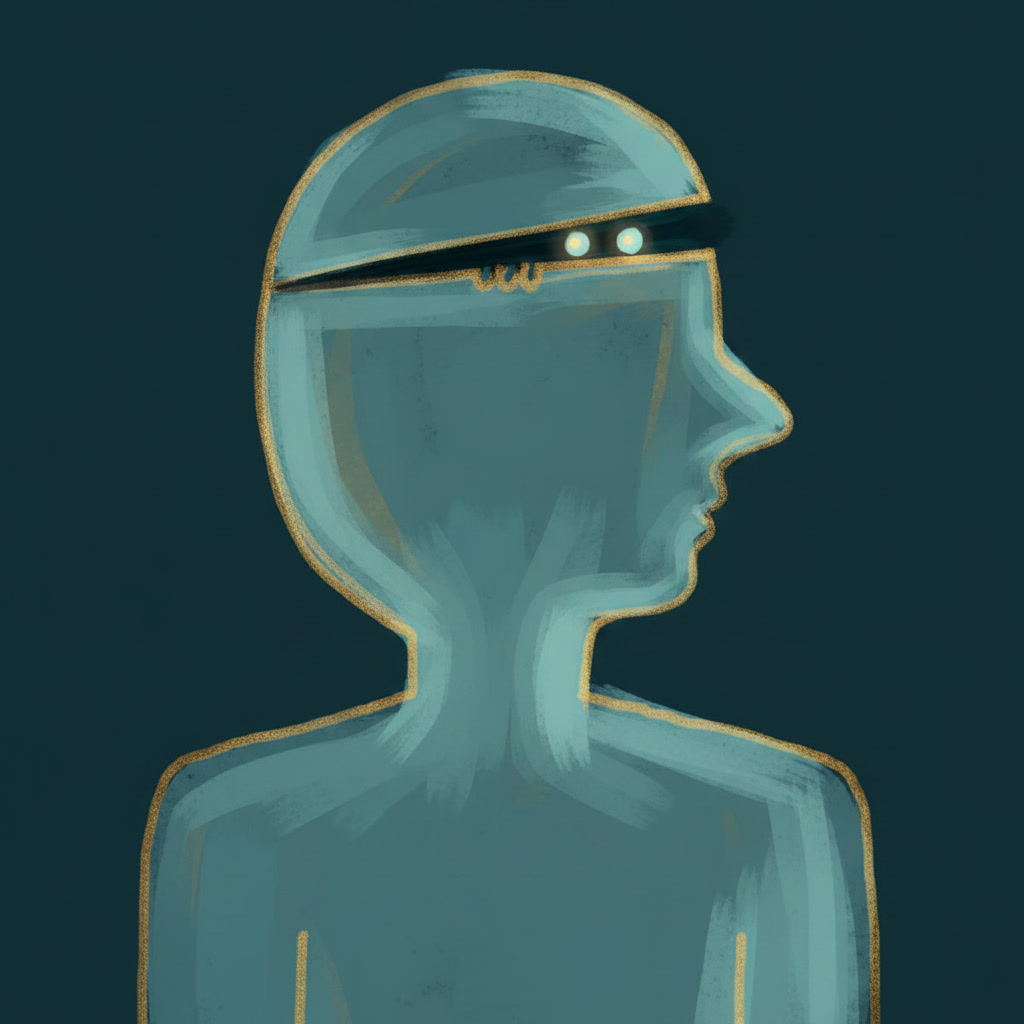
What if the problem isn't intrusive thoughts, but the way we meet them?
Optional Listening
If you’d like, let this music play quietly in the background as you move through the reflection.
Member Question
"How do I get rid of my intrusive thoughts? I can't seem to stop them even when I try to meditate. They are ruining my life."
AlchemistOne Answer
What if the problem isn't intrusive thoughts, but the way we meet them?
For anyone who's struggled with addiction or a mind that feels at war with itself, thoughts can seem powerful, convincing, and deeply personal. But look a little closer: do you actually choose them? Or do they simply appear, uninvited, and then multiply the moment they're believed?
If you are ready to question everything you've assumed about your mind, there may be far more space available than you ever imagined.
Read the reflectionReflection
When we ask, "How do I get rid of intrusive thoughts?" we begin with the assumption that some thoughts belong, while others are intruders.
But look closely: all thoughts are intrusive.
Do you sit down and prepare your thoughts before they arrive? Do you choose the next sentence that appears in your mind? Thoughts simply arise, unbidden, spontaneous, like bubbles surfacing in a glass of water. They only become "intrusive" when they are believed, when a passing mental event is claimed as personal and woven into identity.
The attempt to get rid of a thought is often the very mechanism that keeps it alive. What we resist must persist. In addiction, this becomes the "white-knuckle" trap: the harder we fight a thought, the more energy and attention we give it. We unintentionally validate it as something dangerous, personal, or true.
But a thought has no real substance. It is an energetic movement arising from conditioned patterns, patterns shaped by a lifetime of unchosen experiences, nervous system strategy, and inherited assumptions. Thoughts appear on their own, just as clouds gather without a conductor.
Trying to "get rid" of a thought is like trying to suppress smoke with your bare hands. The more you grasp, the more it swirls around you. This struggle often manifests as helplessness, frustration, exhaustion, and even rage.
So if unwanted thoughts cannot simply be forced away, what then?
We turn our attention 180 degrees. Instead of looking at the thought, we look for the thinker.
Most of us assume there is a solid “me” located somewhere behind the eyes — a central entity who is suffering from these thoughts, these cravings, this addiction. But what happens if we look directly for that self, as carefully as a scientist searching for evidence?
Who exactly are these thoughts intruding upon?
Can you find a permanent, solid thinker inside your head?
When we genuinely search for the one who is supposedly thinking, we begin to encounter the mind’s own blind spot. Rather than finding a fixed self, we discover something unexpected: silence, openness, spaciousness. This is because there is no solid and separate entity at the centre of experience — only a fluid, ever-changing process.
Addiction, then, is not an identity but a temporary whirlpool of energy, caught by attention and held in place by the belief that it reflects who we fundamentally are.
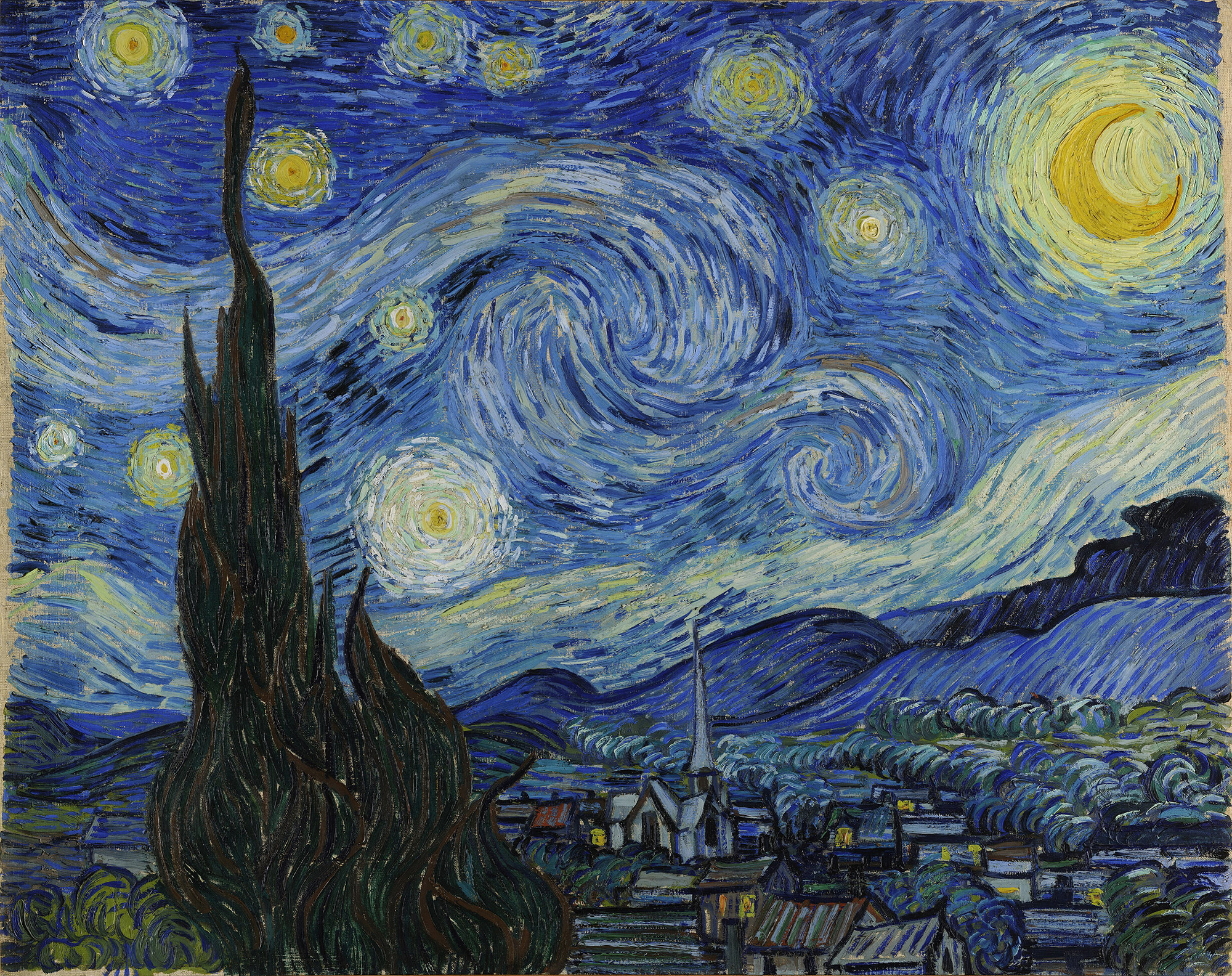
In this quiet investigation, the nature of the problem begins to change.
You realise you are not the person fighting thoughts. You are the space in which thoughts appear.
Even the dark, repetitive thoughts tied to addiction begin to lose their authority when they are recognised as not fundamentally personal. They are movements passing through awareness, no more “you” than a bird crossing the horizon belongs to the sky.
You do not free yourself from intrusive thoughts by winning a war against them. When the “thinker” is revealed to be more assumption than reality, thoughts lose their hook. They arise, linger for a moment, and — with no one left to argue with them — dissolve back into the silence from which they came.
And perhaps the deeper question is this:
What might happen if the next thought of lack, despair, craving, or frustration was not automatically believed — and instead, attention rested in the vast space in which all thought appears and disappears?
3 Ignitions
01“You don't have to control your thoughts. You just have to stop letting them control you.”
— Dan Millman
02“No amount of thinking can free you from the riddles created by thought.”
— John Wheeler
03“The real voyage of discovery consists not in seeking new landscapes, but in having new eyes.”
— Marcel Proust
A Direct Practice

Hey friend,
Do we ever invite thoughts over to play? Or are they always uninvited guests?
Let's explore together...
Set a timer for a minute and, without any pressure to be 'hyper focused', observe what comes and goes into consciousness over the next sixty seconds. Observe the natural ebb and flow of thought.
Maybe thoughts of the past come up, or what you're planning to have for dinner. It doesn't matter what appears. For this practice, we're less interested in the content of thoughts and more interested in their coming and going.
Do this for a minute now.
Okay —
Did you notice that there's no gatekeeper? No bouncer deciding who's allowed in? And that all thoughts arrive unannounced?
Or did you notice that you were trying to control your thinking?
All are welcome, because they all point to the same thing: the very nature of thought is that it comes and goes when we're not trying to control it.
Ironically, it is our attempts to manage and remove thoughts that cause them to linger. Like an uninvited house guest that refuses to leave until they've taken a proper look around — the more you try to usher them out, the more they dig their heels in.
Here's something to ponder until the next edition of The Catalyst:
With love,
Sam
1 Chance to Change Your Mind
What if the belief that thoughts are personal sits at the root of all addiction? And what if freedom has nothing to do with getting rid of them, but with discovering who we are without our attachment to them?